The second cup is the one that matters
.svg)


People don't come back to my cafe because of how the coffee tastes.
That's a strange thing for a cafe owner to say, but it's true. The coffee has to be good. If it's bad, they won't come back. But good coffee doesn't explain why someone walks past three other cafes to sit in mine on a Tuesday morning.
I only really understood this after reading an essay by Shubhangi Rastogi, who writes a Substack called No Stylist Society. She was writing about perfume, but the idea transferred cleanly. Her argument was that luxury used to be sensorial, meaning you decided if you liked something by smelling it, tasting it, touching it. Now it's semiotic. People decide what they think about a product before they ever experience it. The decision is pre-sensory.
In her model, the actual product shows up at step 6 of the funnel, not step 1. Translate that to cafes, and it gets uncomfortably accurate.
Step 1. The visual hook. A customer is scrolling Google Maps during a lunch break, pinches in on their neighborhood, and taps on your cafe because the cover photo looks warm. Wood tables, light coming through the window, a latte with clean art on top. They've made the first judgment already, and they haven't tasted anything.
Step 2. The vibe. They scroll through your photos. They see the people who spend time there. The outfits, the open laptops, the book left on the table. It feels like the kind of place they'd fit into. Or it doesn't, and they close the tab.
Step 3. The story. They tap through to your bio or your website. The menu mentions you roast your own beans. There's a one-line note about where the beans come from. It's written like a person wrote it, not a marketing team. Something in them softens.
Step 4. The social proof. They notice a friend tagged your cafe in a story last week. Someone they trust has already vetted it.
Step 5. The expectation. By the time they get in the car, they've built a small picture in their head of how the morning is going to go. The seat they'll pick, the drink they'll try, maybe even the photo they'll take.
Step 6. The coffee. They finally sit down, order, take the first sip. This is the moment every cafe owner obsesses over. By the time the customer gets here, most of the verdict on the second visit is already written.
The second visit is decided before the first sip
On the first visit, yes, the coffee matters. That's the sensory test. But whether they come back, whether they turn into a regular, is decided on something else entirely. It's decided on whether they felt seen. Whether the shop meant something to them that morning. Whether the barista remembered their order, or their name, or the fact that their toddler is picky about the milk.
My coffee is the validator. My shop is the meaning.
That's true for cafes, and it's true for salons, gyms, boutiques, and restaurants. Any small business where a customer has five or six equally good options within a ten-minute walk.
Ready to try Qtap?
Qatar makes this brutal
The numbers for Qatar are worth knowing if you run a small business here. About 3 million people total. Roughly 10% with strong purchasing power. Around 70% are lower-income with limited spending. The remaining 20%, mostly expats, are the floating audience you're actually fighting over.
That's a small pool. And inside that pool, you're often not competing with the cafe next door. You're competing with Starbucks, Costa, Caribou, international chains with polished experiences and budgets that could bury you ten times over.
There are really only a few ways a small business can realistically win here. You can sell consumables, where sheer frequency keeps you alive. You can offer something unavailable elsewhere, which is hard to pull off with products and slightly easier with services. You can compete on price, which is dangerous because most of us are here to make a profit. Or you can compete on loyalty, by getting customers to come back more often.
Real loyalty isn't built on discounts. It has to rest on service, experience, and trust.
The part that stung
I'll tell you something embarrassing. For a long stretch, I was the exact customer Starbucks built their app for.
I love coffee. I love independent roasters. I can tell you what washed processing does to a Yemeni bean versus natural. I'm also a coder, and a lot of my week was spent with a laptop open in a cafe, writing code, running my own projects, meeting collaborators over a flat white. Cafes were where I worked.
And still, I was ending up at a Starbucks three or four times a week, because the app kept pulling me back.
Free drink on my birthday. Double stars on Tuesdays, landing right as I was opening my laptop to start the day. A push notification at 3pm on a slow afternoon, mid debugging session, telling me my favorite drink was 50% off for the next two hours. A little progress bar that filled up as I collected stars, with a small hit of satisfaction every time a reward unlocked.
Meanwhile my favorite cafe in Doha, run by a guy who roasts his own beans and knows exactly how I take my V60, had none of that. Better coffee, more soul, a room where regulars actually knew each other. What he didn't have was a system to remind me he existed when I was tired and distracted on a Wednesday afternoon, deciding where to park myself for the next three hours of work.
I knew I preferred his coffee. I knew I wanted to support him. The drift happened anyway, slowly, one Tuesday at a time, because Starbucks was a small steady presence in my day and his cafe was a memory I had to actively pull up on my own.
A few months later, the cafe closed. Nothing had gone wrong with the coffee. Nothing had gone wrong with the atmosphere. The regulars just stopped coming back often enough. I think about that a lot.
That's when I understood what was really going on. Chains win with infrastructure. Apps that remember you, notifications timed for the moment you're most likely to cave, rewards that accumulate into something that starts to feel like a relationship with a brand. Independent shops have the coffee and the soul. They just don't have the machinery.
Why I built Qtap
I watched regulars slip away from my own cafe for the same reason I was slipping away from my favorite one: there was no system working quietly in the background to keep the shop present in their lives. The tools I could find for small merchants were plastic punch cards that customers lost, points systems designed for chains with 50 stores, or generic loyalty apps that treated my shop like a row in somebody's database.
So I built what I wished I'd had, and what I wished the guy roasting his own beans in Doha had too, before he closed.
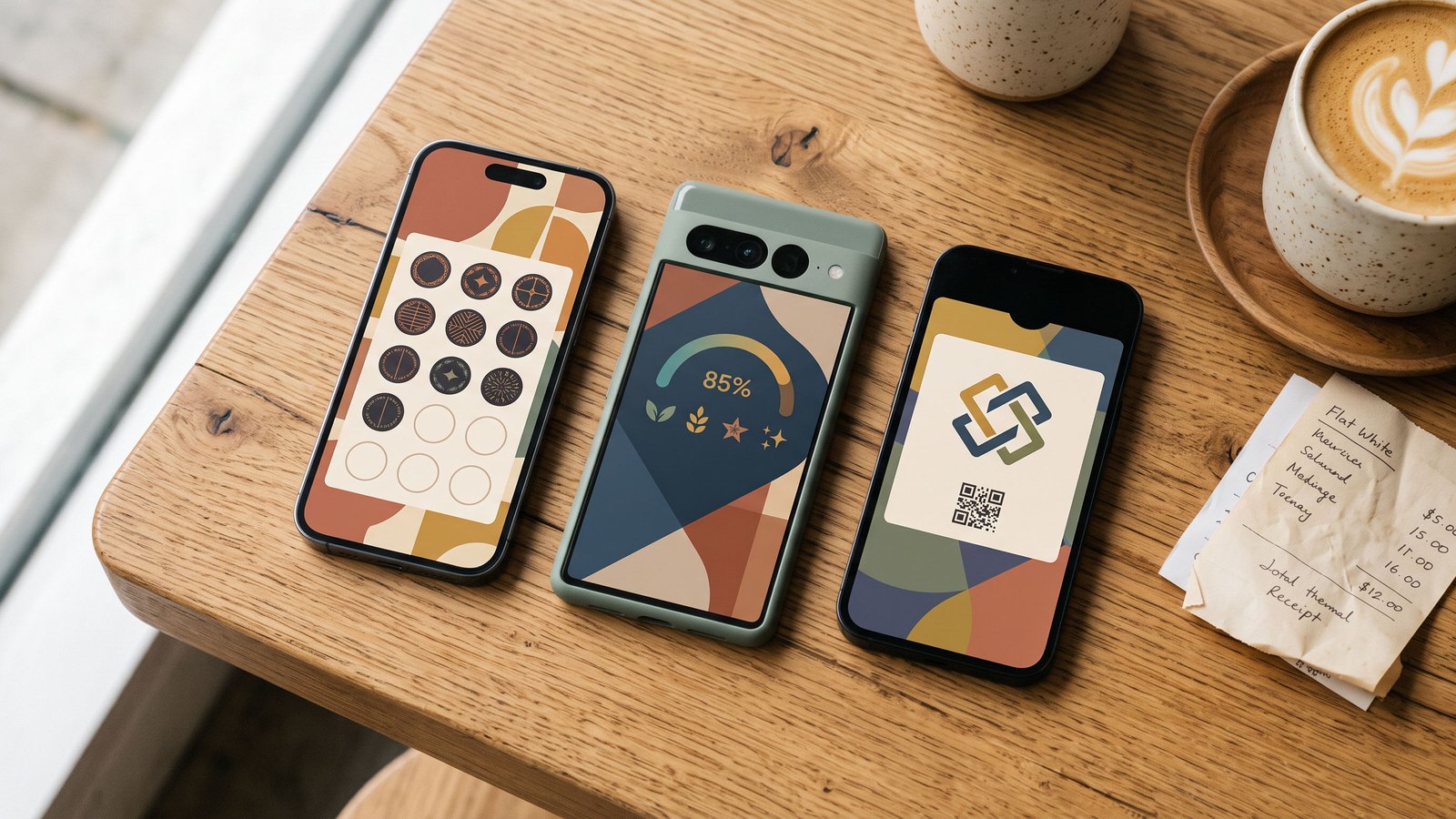
Qtap gives small merchants the same kind of machinery Starbucks uses, sized for independent shops. Stamps for the emotional pull of getting closer to a reward. Points for quietly recognizing your biggest spenders. Campaigns that let you say, specifically, to a specific customer, "we remember you, here's something on us." A tap on a phone and it all just works.
The goal is simple. Qtap keeps your shop present in a customer's life, so the person who loved your coffee on Monday doesn't drift to a chain by Friday.
If you run a cafe, a salon, a gym, or any small business where the second visit is harder to earn than the first, Qtap was built for you, by someone who was you.
— Abdalle, Founder, Qtap
With thanks to Shubhangi Rastogi (No Stylist Society), whose writing shaped this piece.
.svg)