

Best Loyalty Apps for Small Business in 2026 | Qtap
.svg)


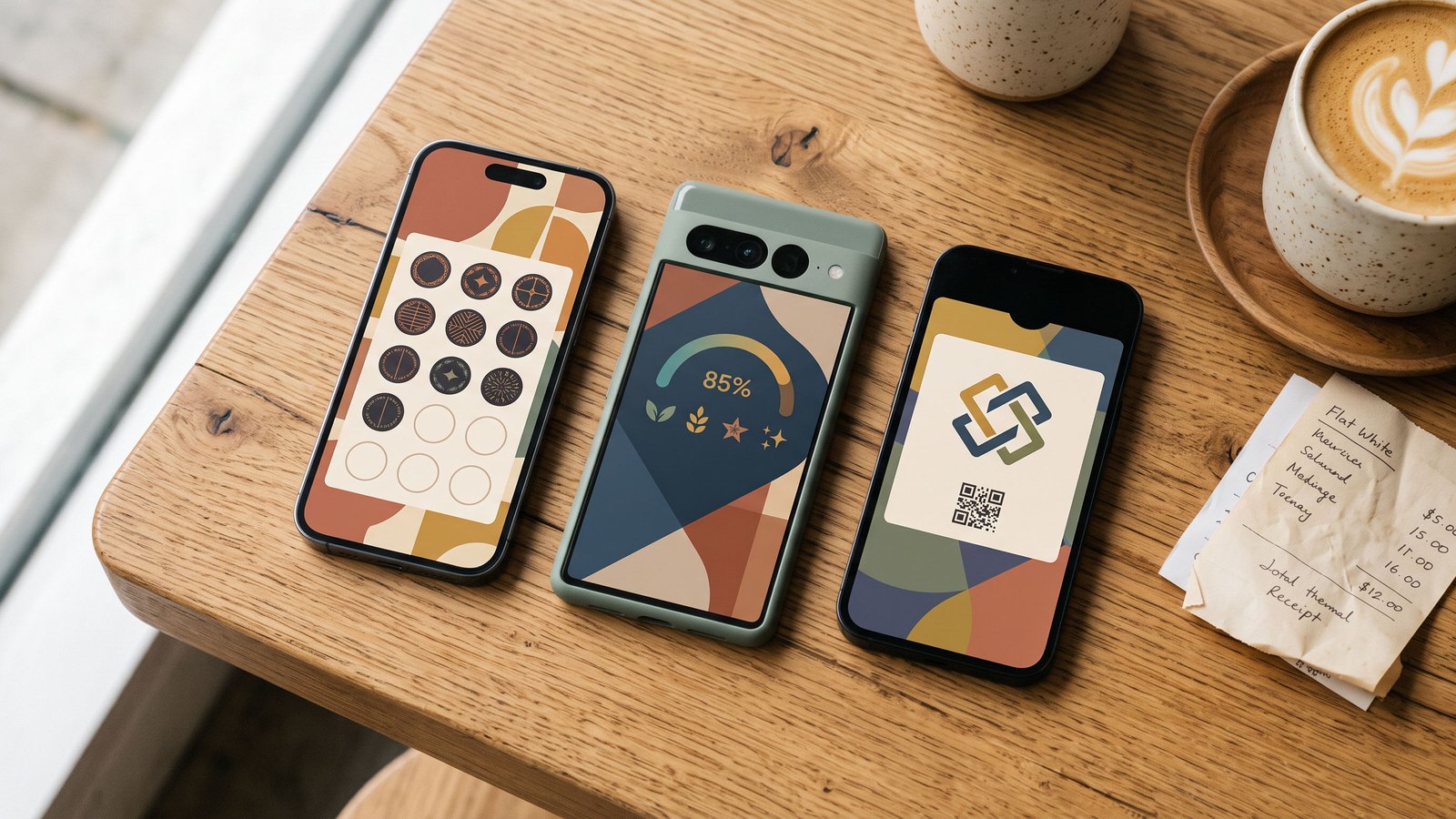
I build one of the apps in this comparison, so read it with that in mind. Qtap is my company. I have tried to be fair to the others, and where they beat us I say so, because a cafe owner who picks the wrong tool and gives up on loyalty altogether is worse for everyone than one who picks a competitor.
A loyalty app for a small business has one job: get the third visit. The first visit is marketing. The second is luck or location. The third is where a regular is made, and it is the visit most owners lose without noticing. So the question is never which app has the most features. It is which one your customers will still be using in week three.
What to judge a loyalty app on
After two years of standing in cafes and salons watching people join, stamp and redeem, three things decide whether a program lives or dies.
Friction at the counter. If joining takes longer than paying, the barista stops offering it by Thursday. The bar is one scan and one tap, with no form, no password and nothing to type while a queue watches.
Whether the customer has to install anything. Most people at a counter will not download an app for a free coffee. A card that lands in Apple Wallet or Google Wallet clears that wall. Some platforms then offer an app on top for people who want every card in one place. That is the right order.
What you learn. A stamp card that tells you nothing is a coupon. The point of going digital is a list of who came in this week, who used to, and who is drifting, with a way to reach them. Without that, you paid for a prettier punch card.
Price matters too, but less than owners think. The difference between $25 and $49 a month is one regular who did not drift. The difference between a program customers use and one they ignore is the whole business.
Qtap
Qtap is a loyalty platform for independent cafes and shops anywhere in the world, built in Doha and sold in any country Stripe supports. The pitch is simple: the machinery the chains run, sized for one counter. Customers join with one QR scan, no app and no form, and the card goes into Apple Wallet or Google Wallet under your name and colour, updating itself after every visit. Staff stamp from any phone. The free Qtap app is where customers see and redeem their rewards and keep every Qtap card in one place, and it is recommended rather than required.
What separates it is everything after the stamp. Two kinds of campaign vouchers, which no other app on this list has: pull offers you publish for anyone to claim (buy one get one, a percentage off, a free item, bonus stamps, a custom voucher you write yourself, with claim limits and cooldowns you set), and push campaigns Qtap sends to members who qualify, seven automated types from birthday to win-back to flash sale. On top of that, custom notifications to segments Qtap builds for you (VIPs, regulars, new members, at risk, near a reward), with templates, scheduling and open and click reporting. Growth and above get AI Insights on the dashboard. Elite and above get the part I am proudest of: you connect ChatGPT or Claude to your own loyalty data and ask it, in plain language, who is drifting, which reward is working, and what to send this week. It reads and recommends. You run the campaign from the dashboard.
Where it loses: Qtap is new, so there is no library of case studies yet. It runs beside your POS rather than inside it. Plans start at $29 a month; the AI connector needs Elite at $79. See the cafe page for a worked example.
Stamp Me
Stamp Me is the most established digital punch card app for cafes and restaurants, and the one most owners have heard of. Customers join by scanning a QR or searching inside the Stamp Me app, then collect stamps by tapping a counter pod, a tag, or a one-time code. Wallet passes are supported on top of the app.
Where it wins: the case-study library. Stamp Me has been doing this for years across Australia, the UK and beyond, and they publish real merchant stories. Their counter hardware, the StampPod, is a nice answer to the rush-hour problem. If you want proof before you commit, they have more of it than anyone.
Where it loses: the customer has to install the Stamp Me app to get the full experience, and the card carries their name before yours. Marketing tools sit on higher tiers. Their pricing page listed plans from about $49 a month when I checked in September 2026. Check it yourself, it changes.
Loopy Loyalty
Loopy Loyalty does one thing and does it cleanly: a stamp card that lives in Apple Wallet or Google Wallet, with push messages and a simple stamper app for staff. No customer app at all.
Where it wins: simplicity and price. If you want the lightest possible wallet-pass card and nothing else, it is hard to beat. Setup is fast and there is no learning curve for staff.
Where it loses: it stays a stamp card. No points, no campaigns that trigger on behaviour, no view of who is drifting, and staff stamp by hand with no tie to your sales. Their page listed plans from about $25 a month in September 2026. Verify on their site.
Ready to try Qtap?
Two honourable mentions
Square Loyalty makes sense only if your checkout already runs on Square. Points post at checkout with nothing extra for staff to do, which is the lowest-friction stamping there is. There is no Wallet pass and the program is locked to that POS, so switching POS later means starting over.
TapMango is the heavier option for multi-location businesses that want SMS marketing wired into the POS. It is more than a one-shop cafe needs, and it does not publish pricing, so budget a sales call.
Which one, then
If you want campaigns, vouchers and an AI that reads your numbers on top of the card, Qtap. If you want the deepest library of proof before you spend a dollar, Stamp Me. If you want the plainest Wallet stamp card and nothing more, Loopy Loyalty. If you are already on Square, start with Square Loyalty and add something on top when it stops being enough.
Every one of these lets you start without a long contract. Testing costs an afternoon: print a QR, put it by the card machine, and count how many people add the card in a week. That number will tell you more than this article can.
Questions owners ask
What is the cheapest loyalty app for a small business?
The cheapest paid tiers among the apps here are in the $25 to $29 a month range, and several offer free plans capped by members or stamps. Watch for per-customer or per-message fees, which are what make a cheap plan expensive once the program works.
Which loyalty apps work outside the US and UK?
All of these run in any country where the app stores and card payments work. Qtap bills through Stripe in any country Stripe supports, and vouchers, offers and notifications can be written in any language. Check each vendor's support hours against your own time zone before you commit.
Do customers have to download an app?
Not to join or to collect stamps with Qtap or Loopy Loyalty, where the card lives in Apple Wallet or Google Wallet. Stamp Me works best with its app installed. Qtap's app is where customers redeem and keep their cards, so it is recommended once they are in. The platforms that skip the install at the start get more customers past the first visit.
Abdalle Ali, founder of Qtap. I answer questions about any of these tools, including the ones I do not sell, at hello@qtap.qa.
.svg)


